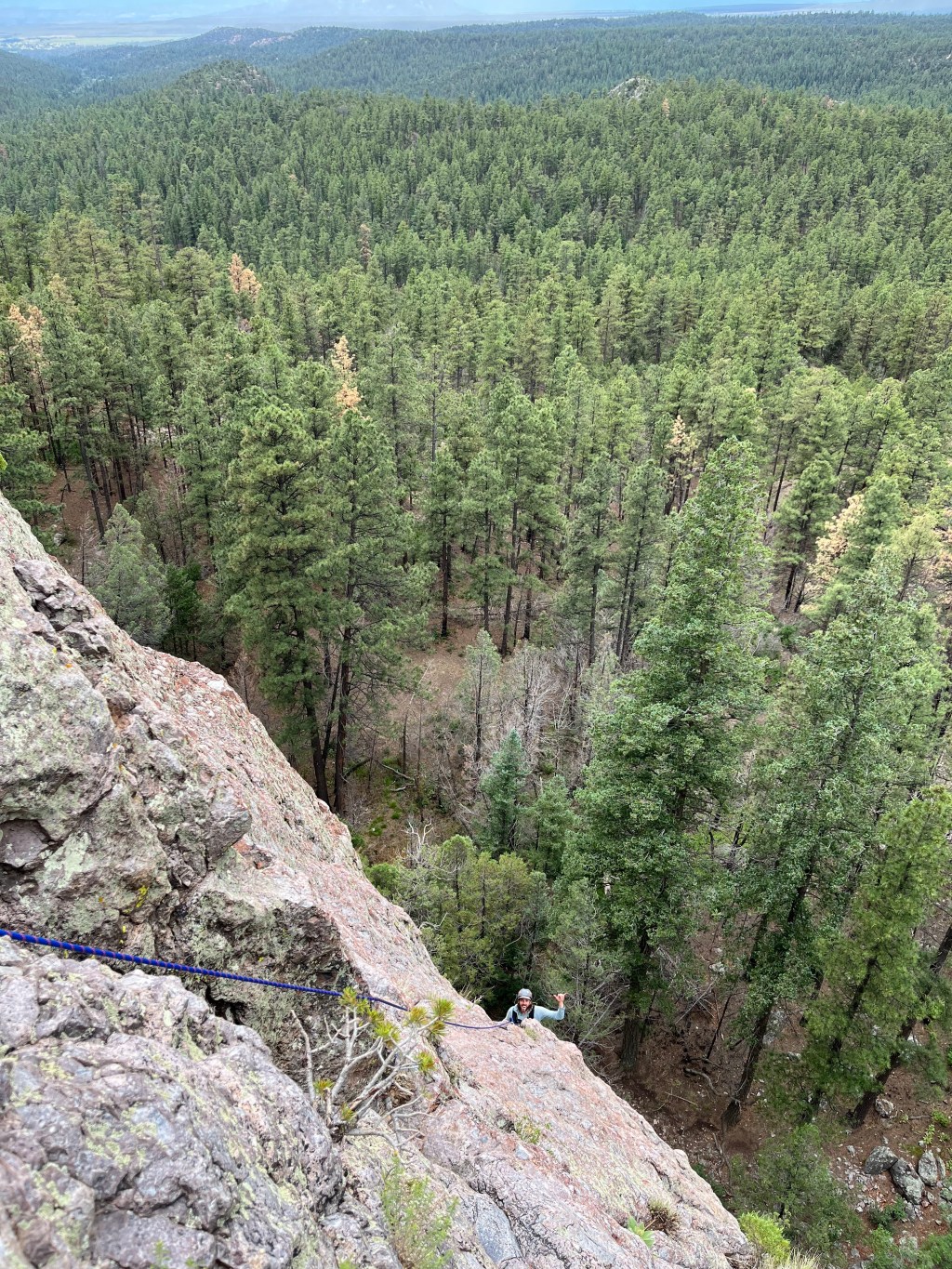
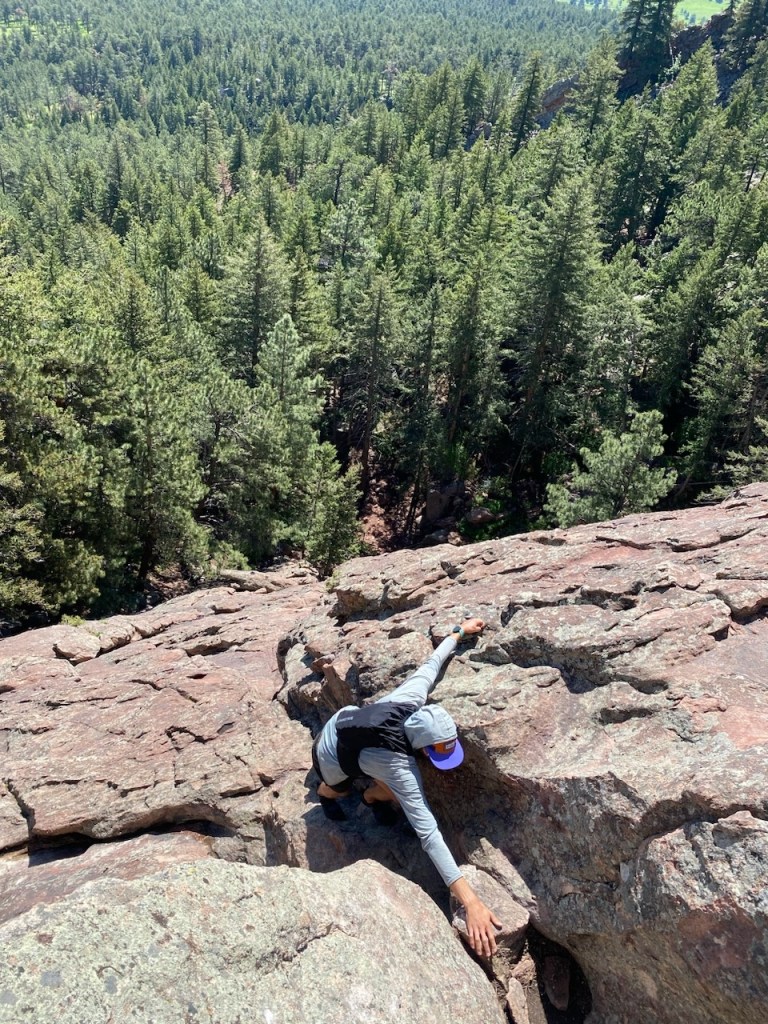
If you’ve read some of my posts, you have probably come to understand that I quite enjoy hiking and running in the mountains. Spending five months on the PCT, doing nothing but hiking, was incredible and I loved every day of it. That said, the trail itself is kind of boring, rarely exceeding a grade of 500 feet per mile and almost never hitting the spectacular summits that it comes so close to. Maggie and I did some side quests, such as Mount Whitney, but even the highest mountain in the lower 48 had an immaculate trail built to keep the hiking in the neighborhood of Class 1. It’s the off-trail peak bagging, scrambling, and climbing that are really the most satisfying, like when we summited Mount Thielsen, or scrambling the second flatiron. While I can definitely see myself doing another thru hike someday, twenty-five hundred miles of easy hiking in 2022 inspired me to expand my skill set for bigger, steeper, and more exposed adventures.
Maggie and I have dabbled in sport climbing, routes where someone has drilled holes in the rock and bolted in hangers you can anchor yourself to as you climb. For the most part, we have done single pitch routes, less than 100 feet or half a rope length. Single pitch sport climbing is the most accessible form of outdoor climbing since it requires minimal equipment and it is fairly safe if the bolts are trustworthy. Sport climbing is all about the climbing experience, a vertical puzzle of body movements to bring the climber a short and powerful shot of thrill.
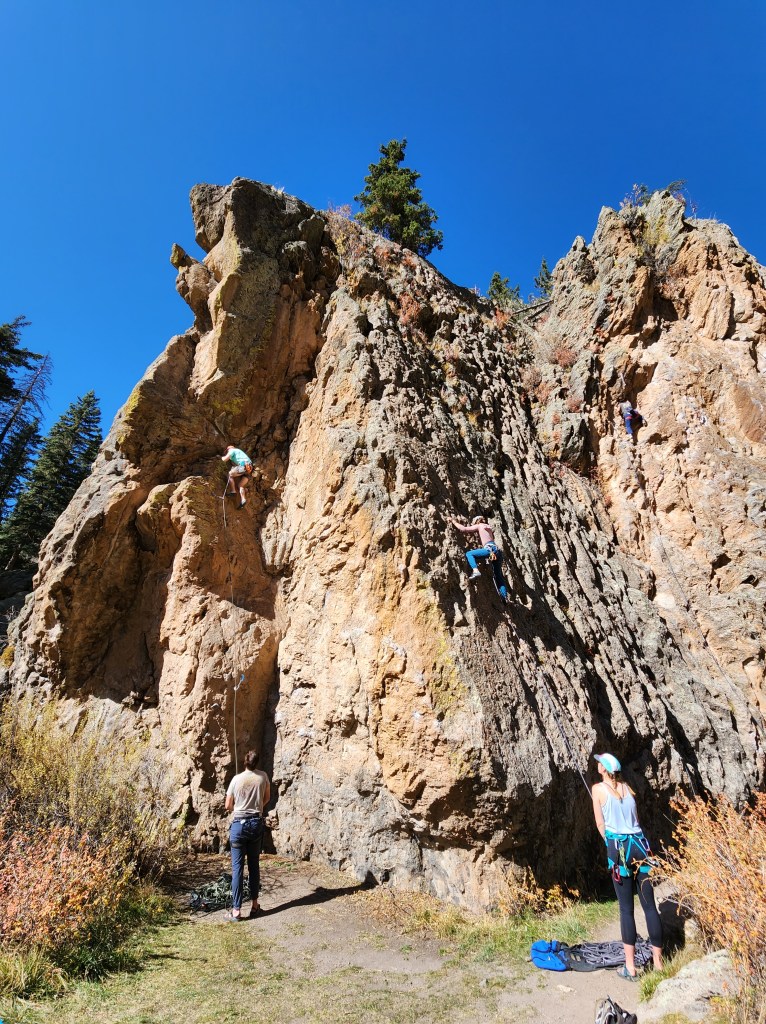
I definitely enjoy hanging out at the crag for a day, but sending short sport climbs feels like you’re not really getting anywhere. I also don’t care about how hard the route is, I prefer to have a fun time climbing up rather than falling and hanging on the rope over and over. After watching way too many YouTube videos, I began to see the light, the intersection of rock climbing and peak bagging.
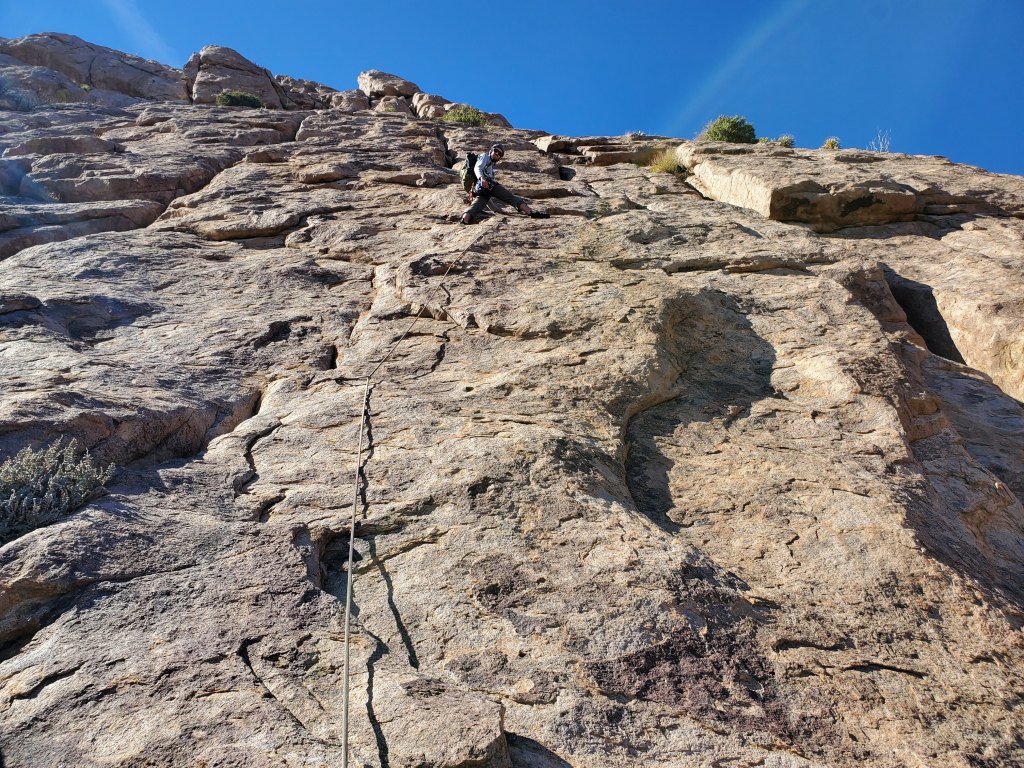
Alpine climbing. Is this the pinnacle of outdoor adventure? The pinnacle of human existence? In my mind, the answer is clear. Ropes, carabiners, protection, belaying, rappelling – this is what I seek. Long moderate climbs to remote peaks. The daunting part, however, is that there is a massive gap between single pitch sport climbing and alpine climbing in terms of skills, equipment, and experience. It would be foolish of me to attempt some bucket list routes in my current state.
First and foremost, there are rarely bolted anchors on alpine climbs. The climber must carry and place their own protection to anchor themselves to the mountain. In the early days, the protection of choice was the mighty piton, wedges and blades with eyelets to clip into. Pitons were hammered into cracks, usually so tightly that they were left there permanently. Solid protection for sure, but over time it became clear that pitons were causing permanent damage to the rock. By the 1970s, some ingenious climbers were starting to invent protective gear which could easily be placed and removed, leaving no trace of their exploits. The clean climbing revolution.
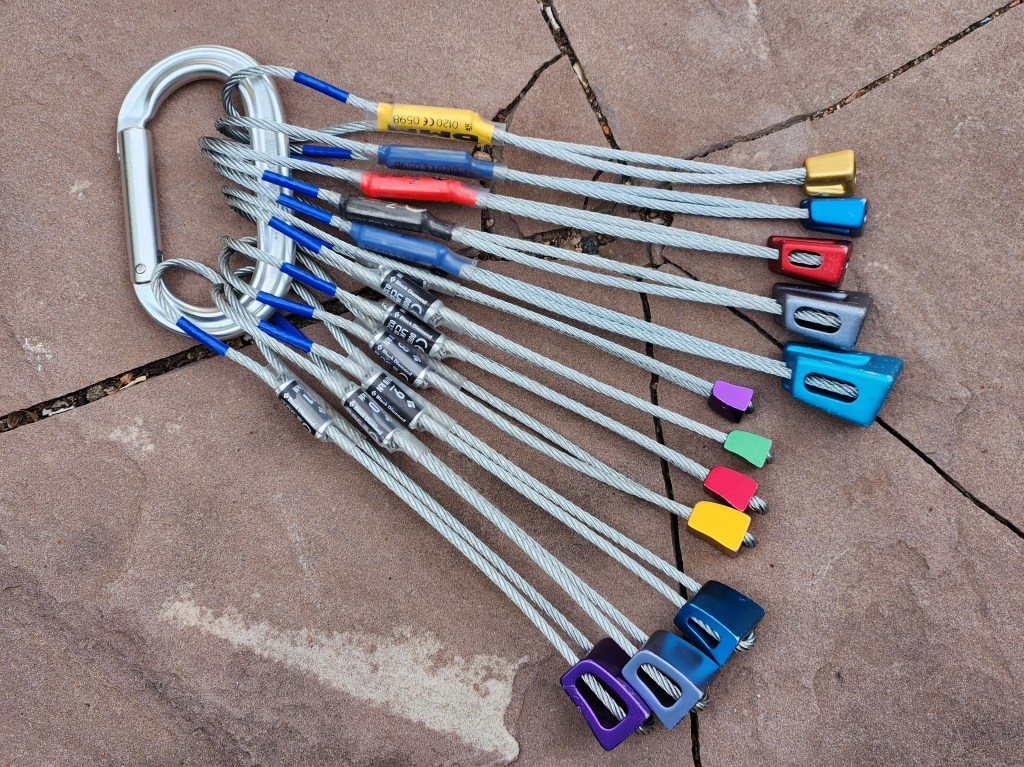
As bolted sport climbing grew in popularity into the 80s and 90s, this old school method of setting your own protection came to be known as “traditional climbing,” or simply “trad climbing.” Today, the most popular forms of protection used by trad climbers are nuts and cams. Nuts are simple trapezoidal shaped blocks of aluminum set on a steel cable. A nut can be placed into a constriction in a crack which will jam up and hold tight if the climber falls on it.
A cam is a little more complicated piece of equipment. Typically with four lobes, the climber can adjust the width of the cam by pulling its trigger. Cams have a wider range of cracks they can fit into, and they can be placed and removed much faster than nuts.
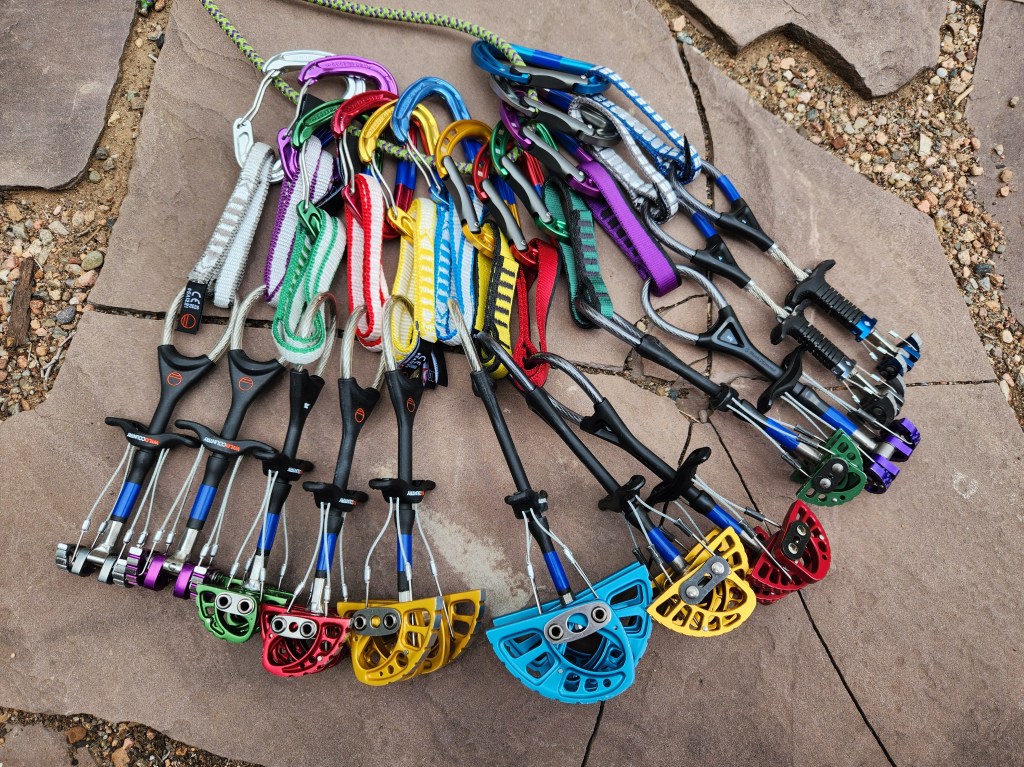
This equipment is not cheap! A typical “starter rack” can easily push into the $1,000 range. I would have liked to buy that gear in 2023, but being apart from Maggie meant I didn’t have a climbing partner. Also I wasn’t working yet, so dropping that amount of cash seemed like an unwise investment without income to buffer my savings. When I started my new engineering job this year, I started researching and slowly accumulated new gear.
After more than a year of thinking about trad climbing and self learning as much as possible, the time came to actually trad climb. I would have loved to go on this journey with Maggie, but she injured her knee at the end of ski season. She was on doctor’s orders to avoid extreme leg movements until surgery and healing occur. Our friend Ryan was back home after a big climbing and mountaineering trip. His stoke was at an all time high, and upon returning one of the first things he asked me was, “El Rito trad area this weekend?”
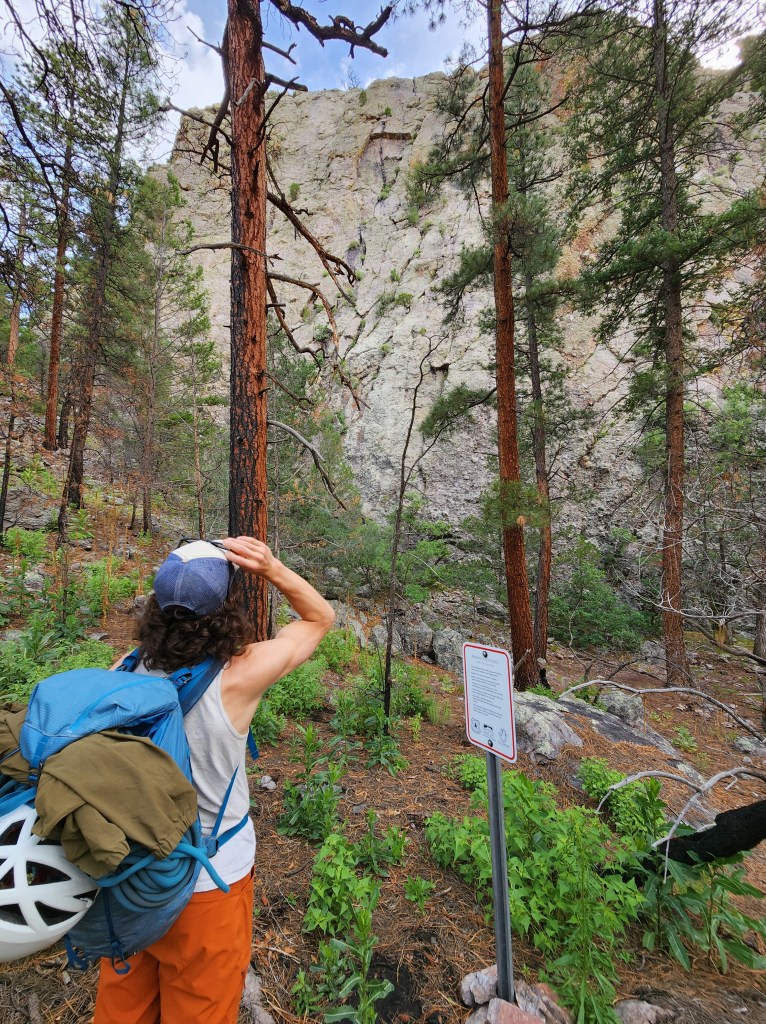
The El Rito trad area is a superb beginner trad crag! Most of the routes are in the 5.4 to 5.7 range – easy to moderate, exactly the sort of grades I expect to climb in the alpine. Two thirds of the routes are 2 pitches, providing a great opportunity to work on multipitch skills as well.
23 June 2024
Ryan and I got to the crag around 9:30, while Maggie went off for a bike ride on the Forest Service roads. We immediately learned how hard it is to find the start of a trad route, as there are no bolts to guide you. After careful studying of pictures and rock features, we finally zeroed in on our route half an hour later. Roped up, racked up, I let Ryan take the first lead. Even though the route was “only” 5.7, it looked a bit steeper and more difficult to protect than I expected, but Ryan was up for the task.
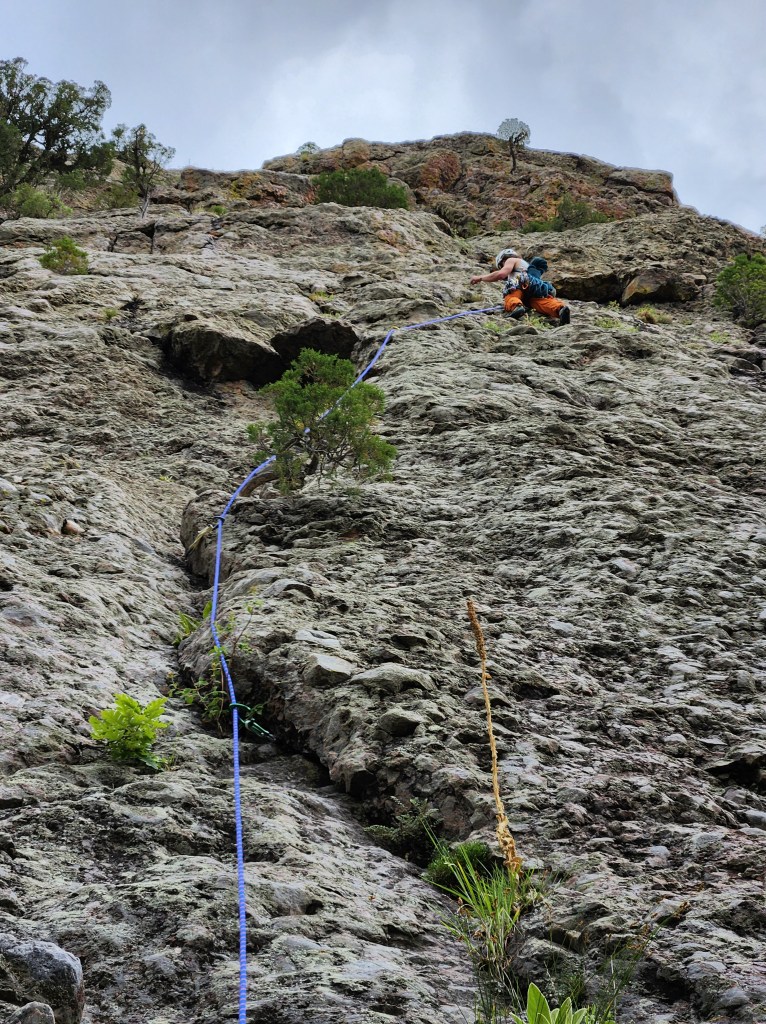
One thing I do enjoy about hiking and trail running is the constant movement, covering lots of ground quickly. Climbing is the antithesis to this style, at least for us mortals. Sport climbing can be slow, but add in the need to find a spot for protection, pick the right size of gear, place it, and test it… Trad climbing is extra slow. It will probably take some time to get used to this change of pace, but it’s the trade off for more epic adventures.
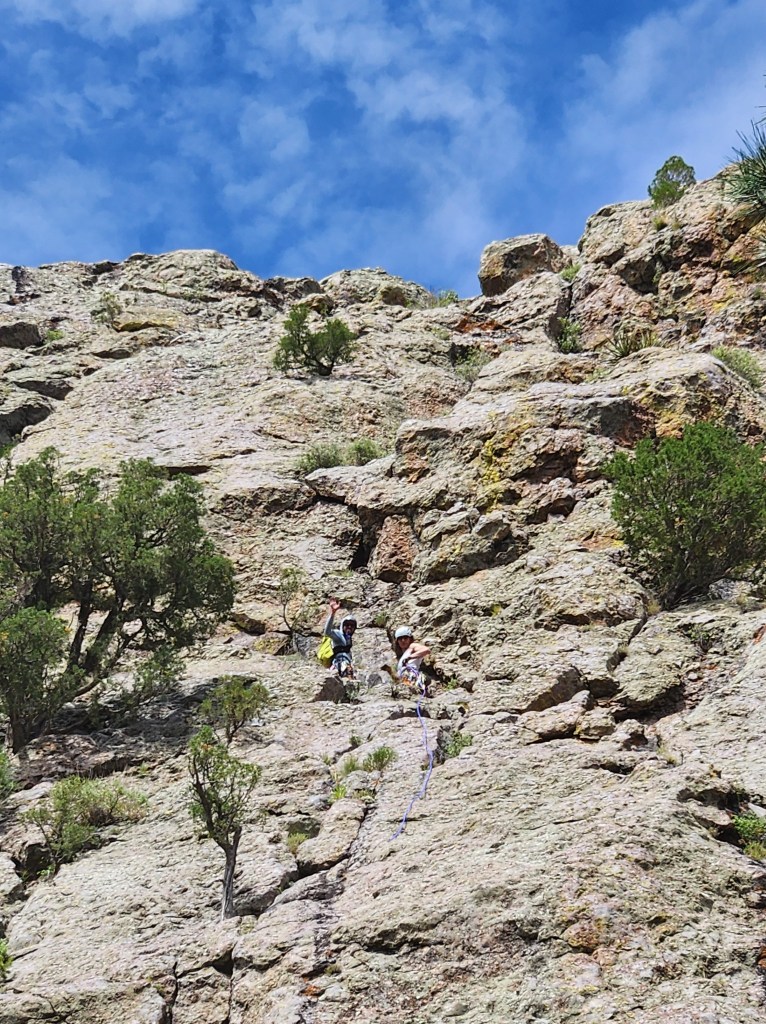
Ryan sent the first pitch and I followed. It quickly became apparent that a well placed nut takes a bit of finagling to free it from the wall. Ryan got creative using some natural protection on the route, slinging a small tree growing in a crack, and slinging a boulder as well. I’m reminded of the old adage that “everything looks like a nail when all you have is a hammer”. Adding tools and skills to my repertoire will help me see beyond normal gear placements.
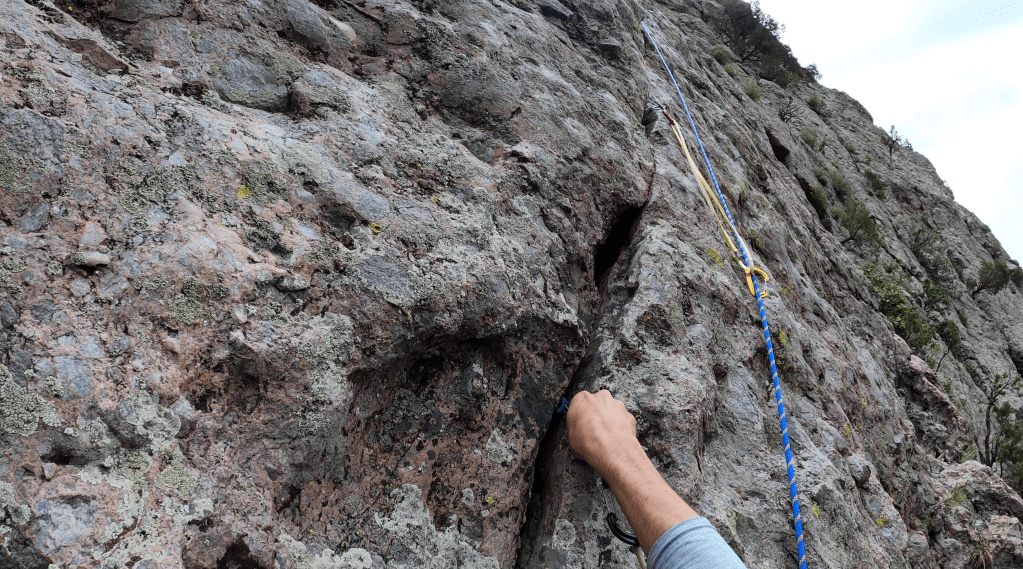
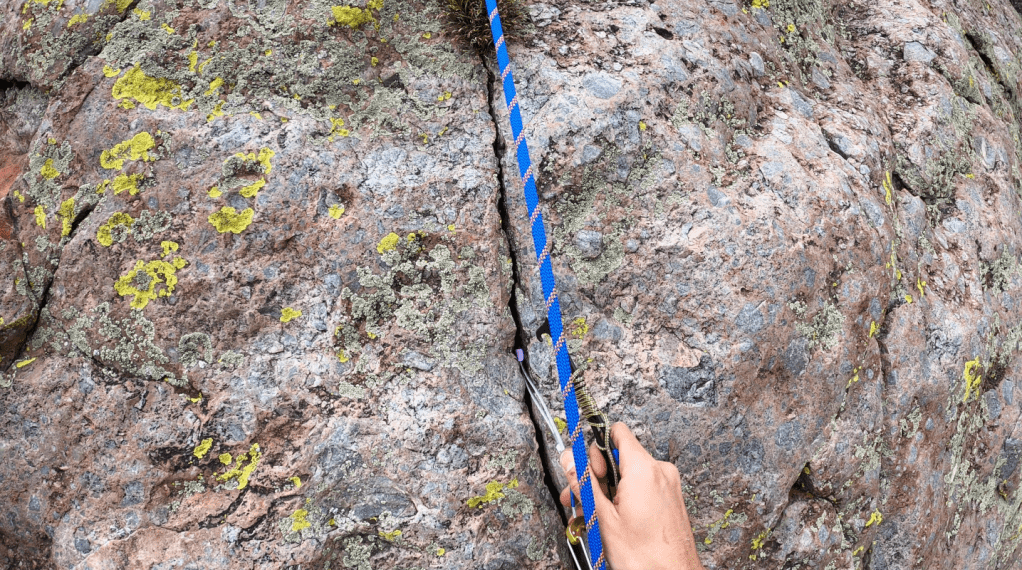
I reached the belay ledge atop pitch one and we exchanged a hearty high-five. Ryan asked me, “You want to lead the next one?” The question sent a shock of anxiety down my neck. Looking up, the rock appeared to be slightly lower angle and more featured than below, totally within my climbing abilities. It was a matter of trusting my own gear placements, which I would have to make someday, so why wait?
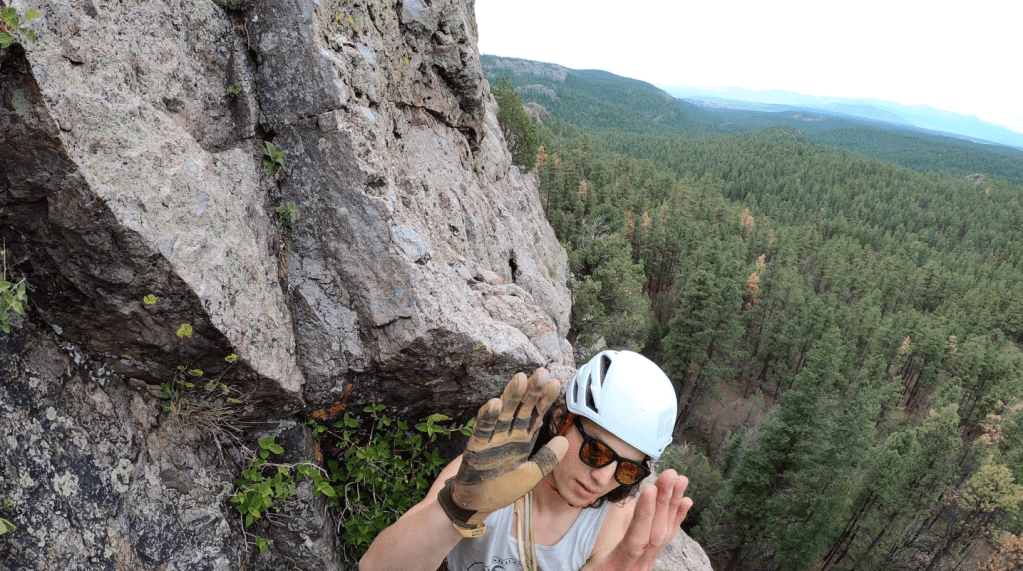
There was one tricky move over a bulge just above the belay ledge. Thankfully, I was able to get a good cam in and pull through. This is a nice aspect of trad climbing – you can place protection where you want it! After that, the route was easy climbing, and I had completed by first trad lead. Ryan followed up and we talked about the quality of my gear placements. I think I scored a solid 90%, good but room for improvement. We walked off and back to the base of the crag. Maggie had returned from her bike ride and we all sat for a little lunch break.
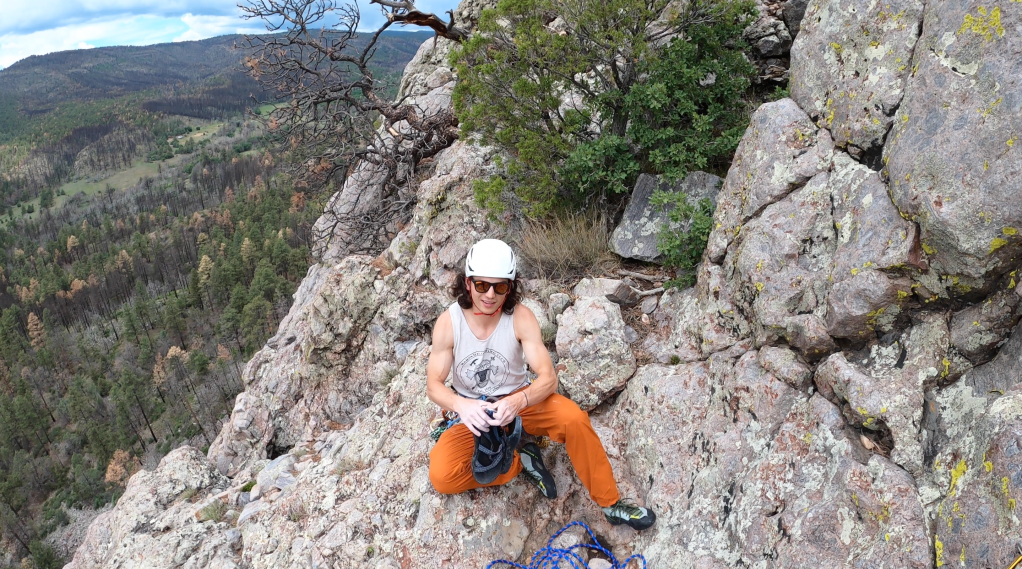
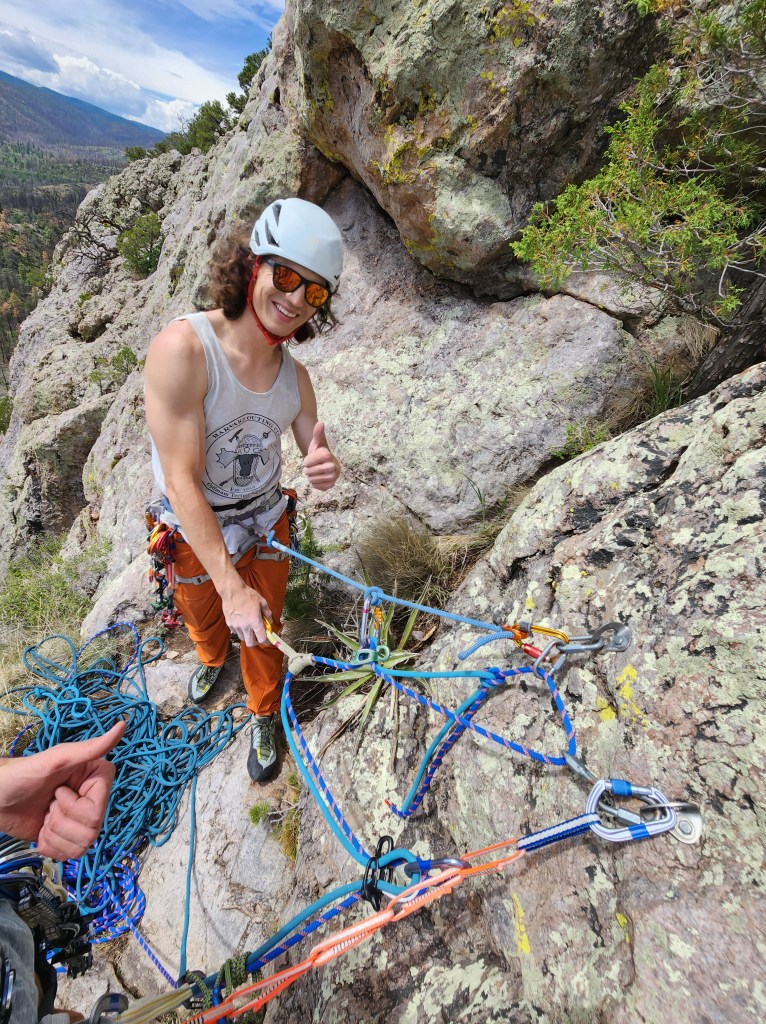
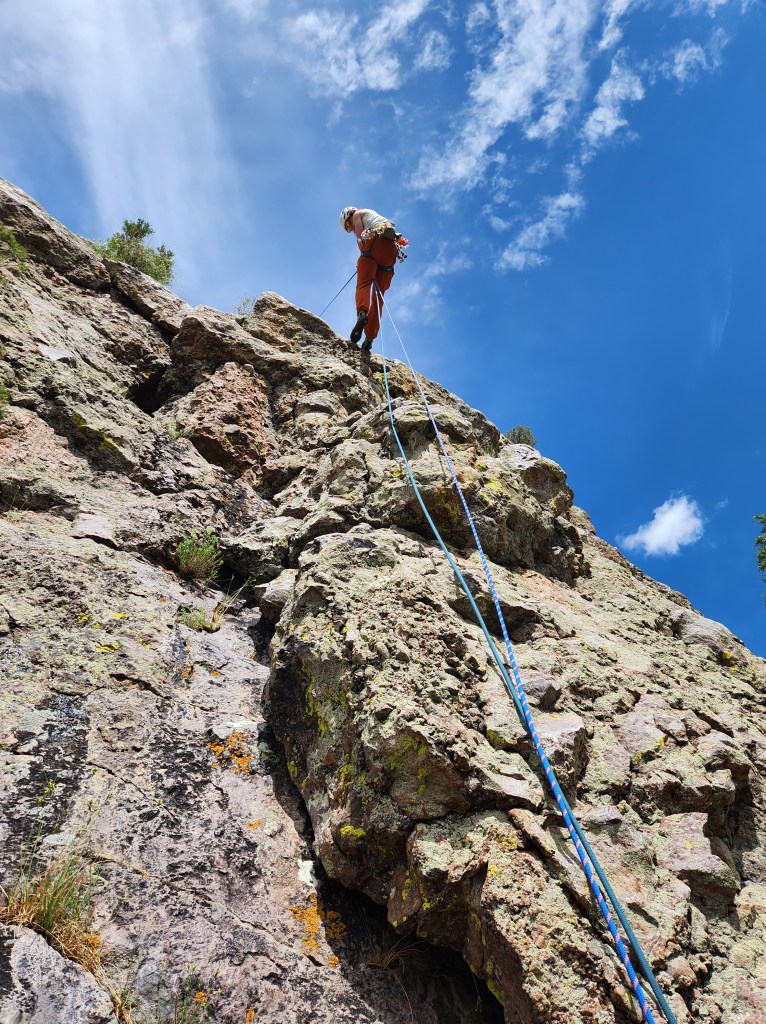
Ryan and I climbed one more two pitch route, basically repeating what we had done with the previous (he lead P1, I lead P2). It was great to climb and play more with new gear. Ryan carried and extra rope up and we rappelled down this time.
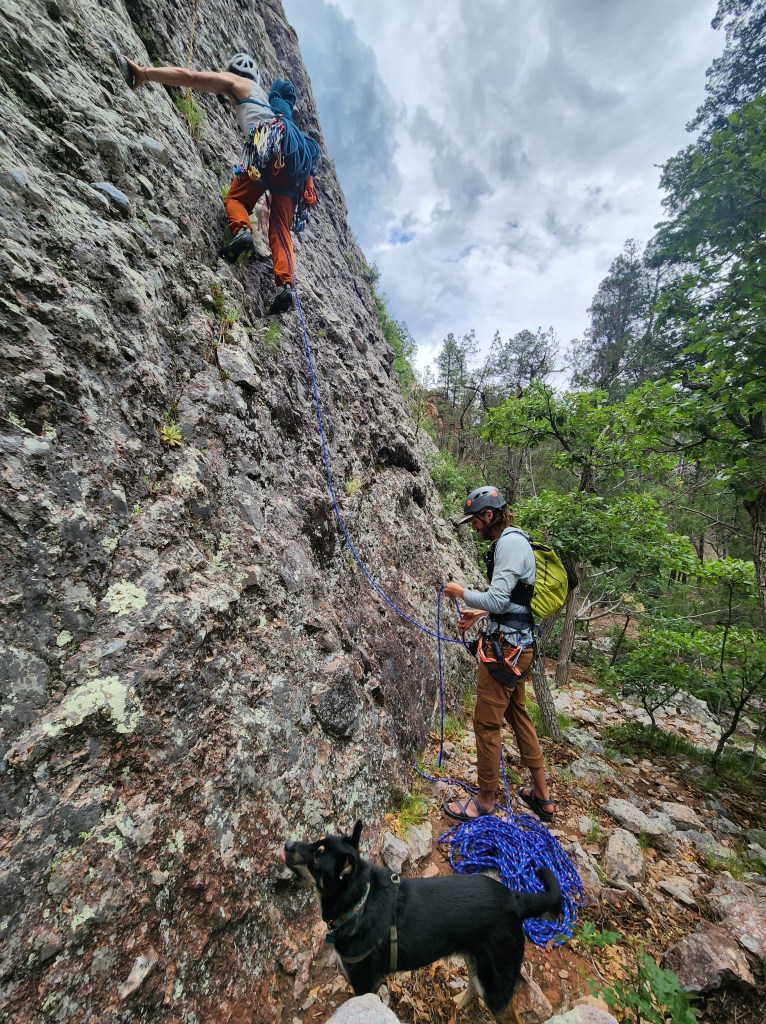
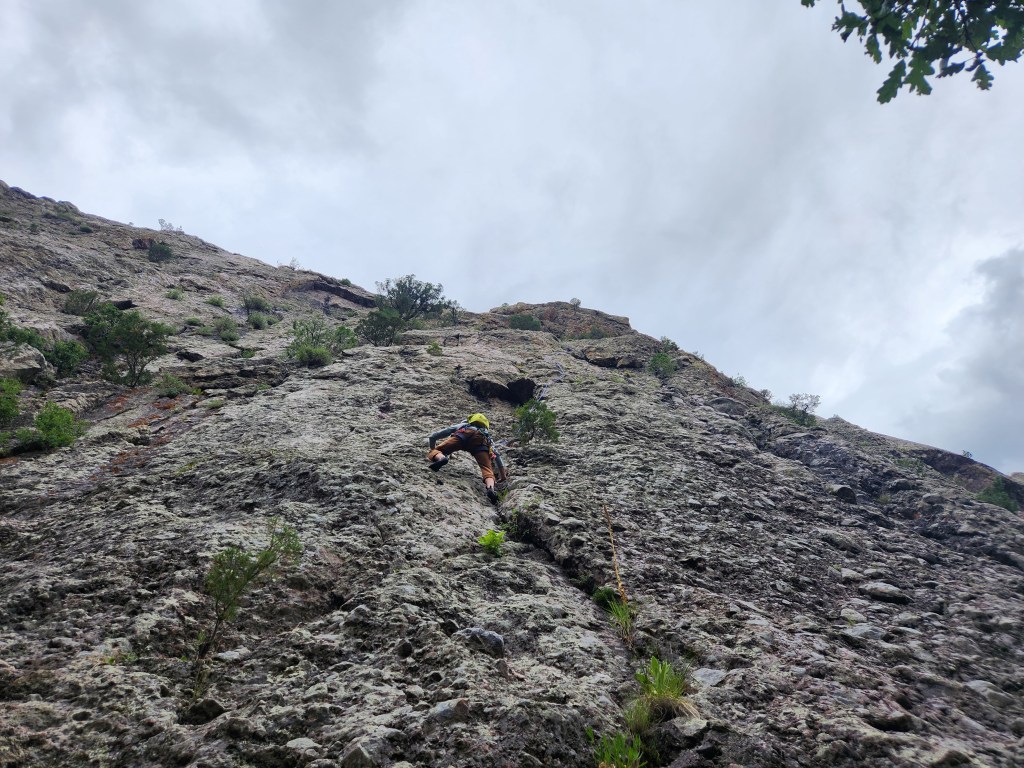
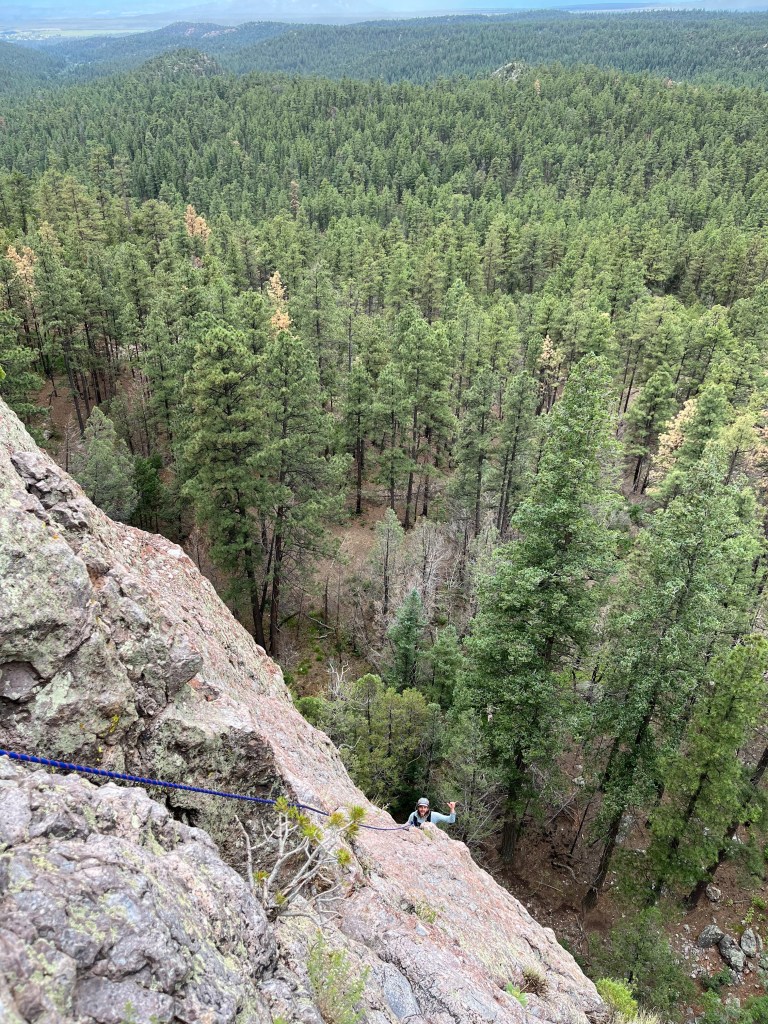
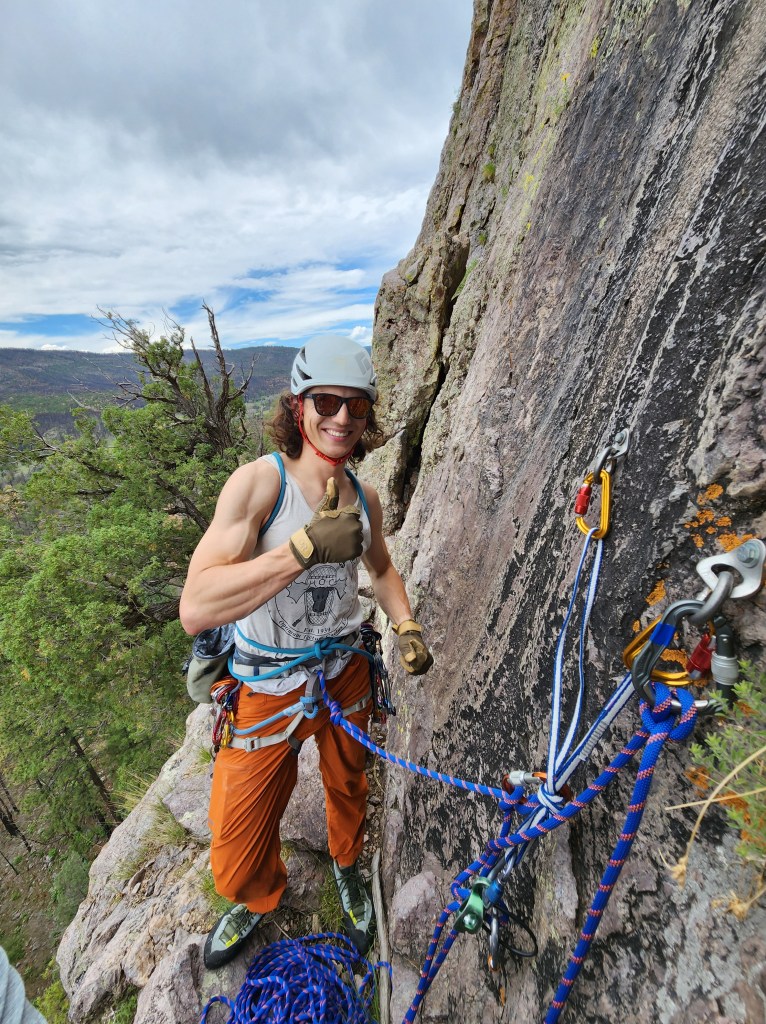
Rappelling seems simple in theory, just brake your descent on the ropes and pull them down. However, it’s rarely that simple, and a relatively minor error can lead to a fatal fall. Ropes notoriously get stuck, which we experienced to some extent on the shrubby slab we were climbing. They find their way into cracks and bushes, making the task of pulling the rope difficult with no way to free them from snags above. Other than a couple hang ups on bushes, we were able to get our ropes and ourselves down to the ground safely.
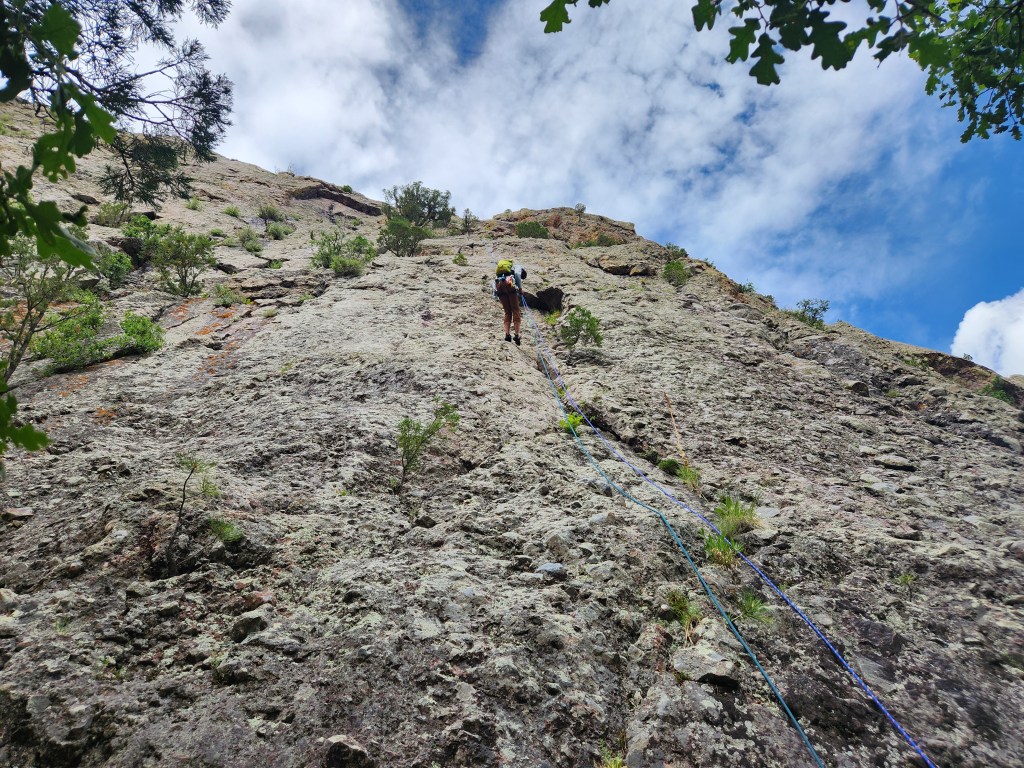
This was the first day of a long journey I hope to continue for years to come! While I don’t see myself climbing a big wall anytime soon (or ever?), I am stoked for the next level of adventure. I am making an effort to go climbing on a regular basis, because frankly, I am still a bit frightened when I enter the vertical world. If thru hiking taught me one thing it’s that time, experience, and fitness help you overcome anything, including fear. There are several moderate routes within a day’s drive I am eager to try now that I have the gear and the skills I need to climb clean in the alpine.
 Distance Over Time