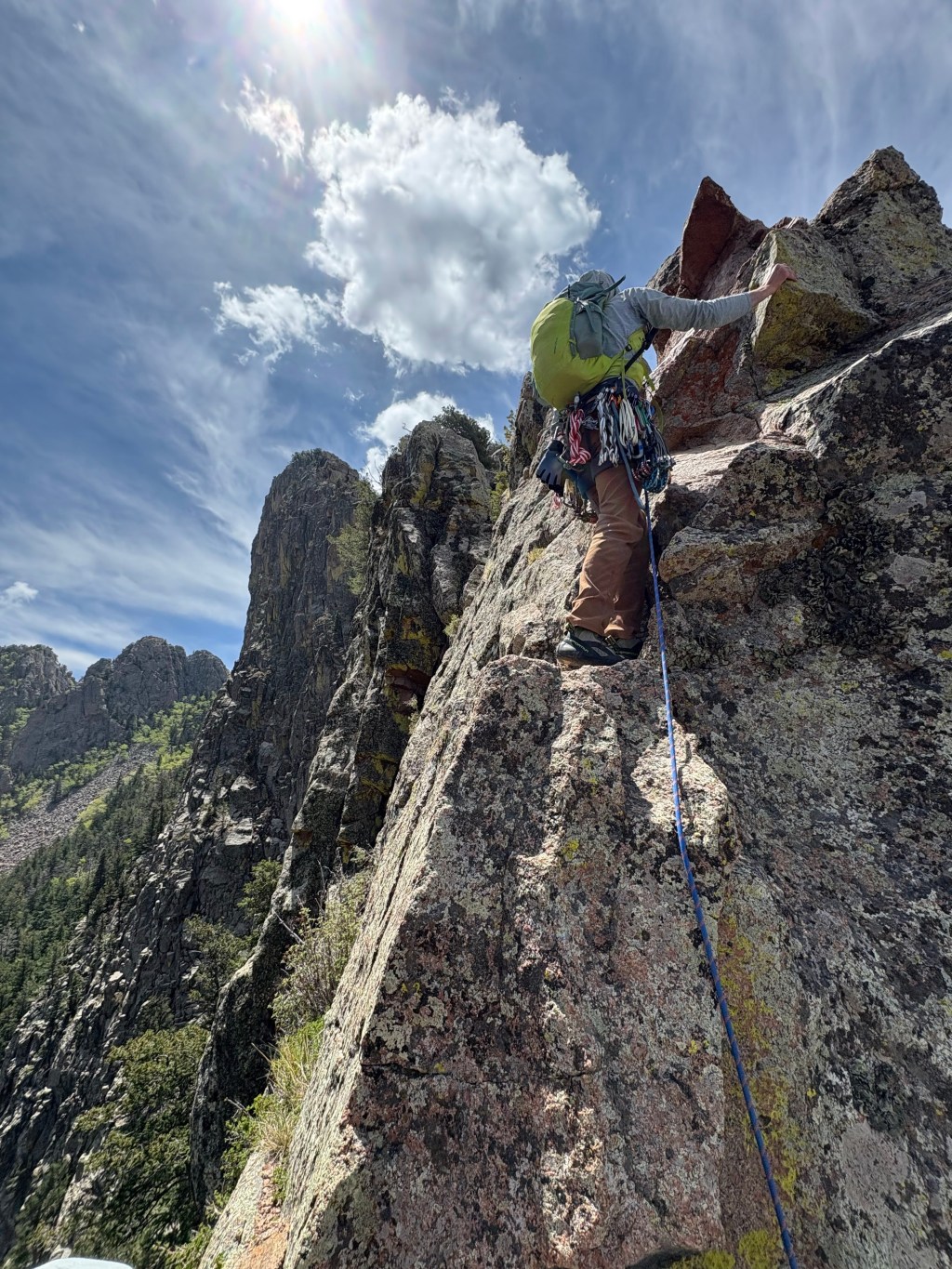
The Sandia Mountains have a lot impressive granite fins and spires packed into a small mountain range. I remember hiking the La Luz trail for the first time in 2020 and seeing climbers dot the towering walls all around. At the time, I never really thought I would be one of those climbers, questing up alpine faces. My stoke and determination has finally overcome that self doubt. I can now say with confidence I’m a Sandia climber.
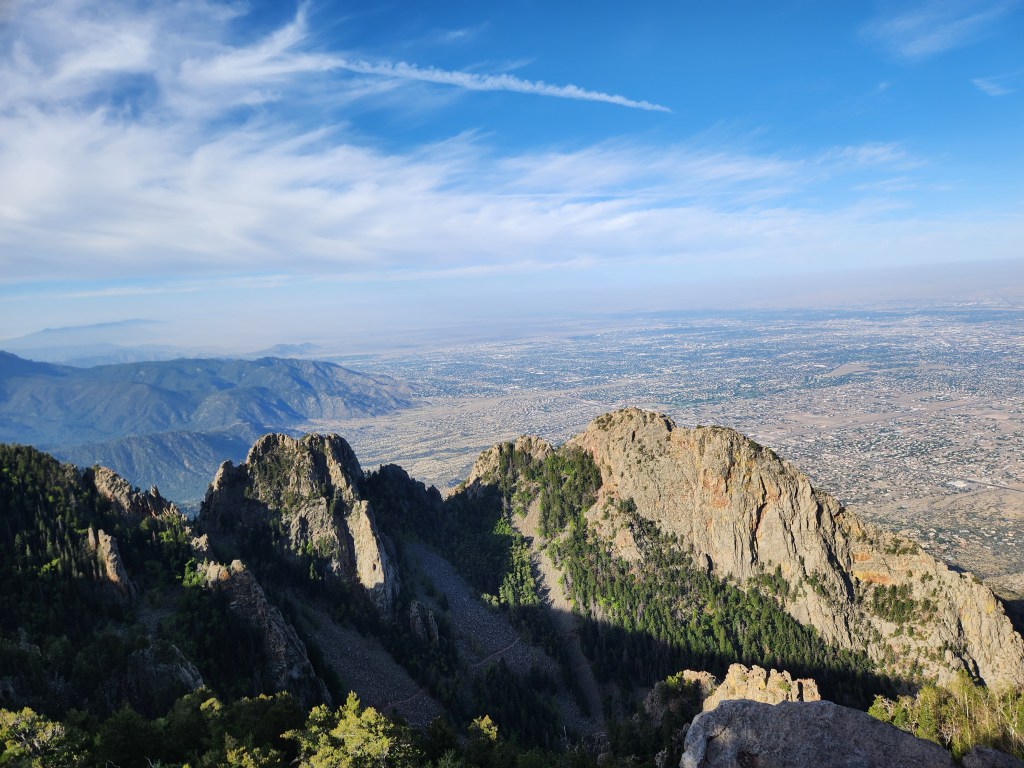
The Thumb (yes, that’s actually the name of the formation) is a narrow fin erupting from a sloping ridge on the south side of La Luz canyon. The easiest route ascends the north west ridge, a six pitch 5.6 followed by several hundred feet of 3rd and 4th class scrambling. This route was on my short list for the accessibility, but more so for the esthetic. The Thumb is a gorgeous piece of rock!

My friend Ryan had attempted this climb in November 2019. He and his partner were in a little over their head that day and ended up bailing about half way. In the quest for redemption, he suggested we go climb The Thumb. Ryan and I have some bigger objectives planned, so we thought this would be a great training opportunity on top getting of being an awesome adventure.
30 May 2025
Ryan and I left Santa Fe before sunrise and drove up to the Sandia Crest. We were one of the first cars in the lot, which I thought was surprising for such a beautiful day, but I guess it was a little too early for most folks. We packed a 60 m rope, single rack of cams to #3 with some doubles in mid-sizes, and a healthy selection of nuts.
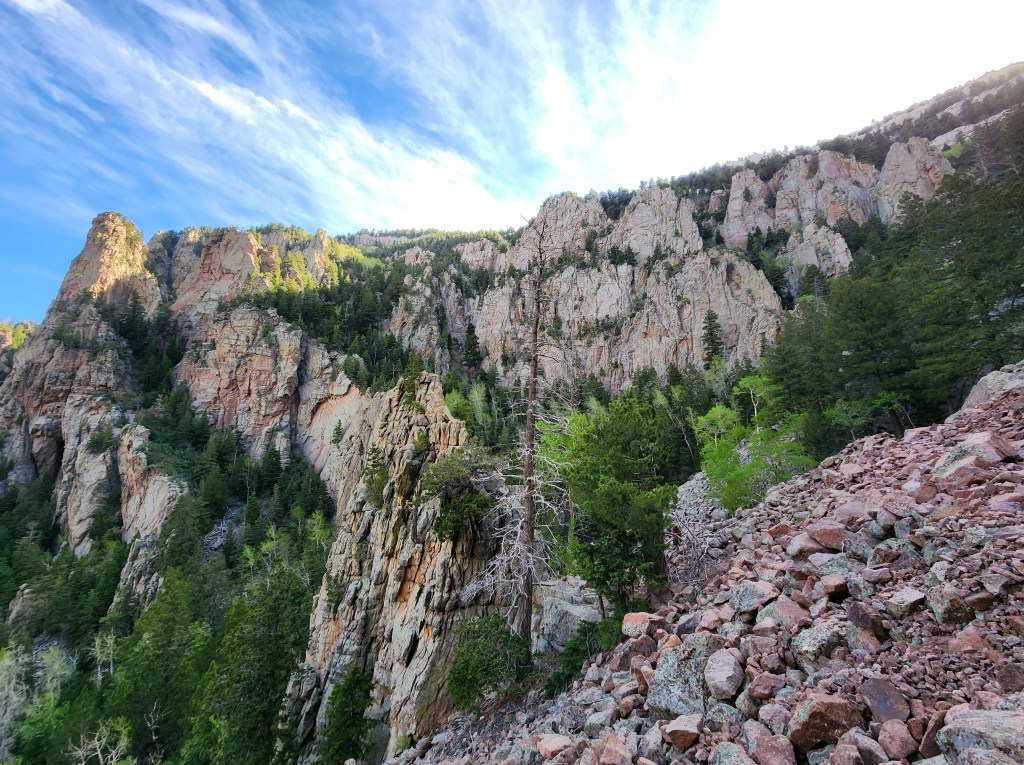
Starting from the top of the mountains, the approach is actually down the La Luz trail, about 2.5 miles and 1,500 feet of descent. The morning light in La Luz canyon was impeccable. There’s so much inspiring rock there! As we dropped The Thumb only grew bigger before us until we were craning out necks to look up.
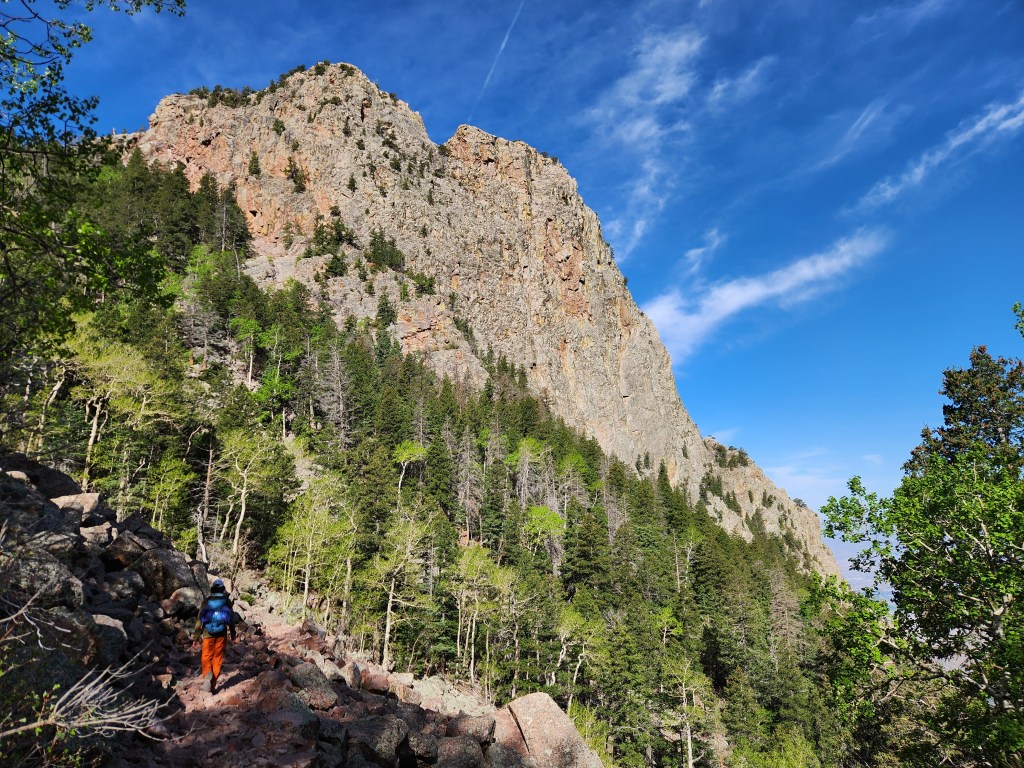
We found the start of the route pretty easily, aided by Ryan’s distant memory from his last attempt. Ryan took the lead for pitch 1, starting up some steep, blocky climbing. He went out of sight soon after since the ridge is less than vertical. The average slope is about 60°. I’m learning that these lower angle 5th class climbs are more like a staircase than a ramp – short shots of vertical climbing with easy scrambling in between.
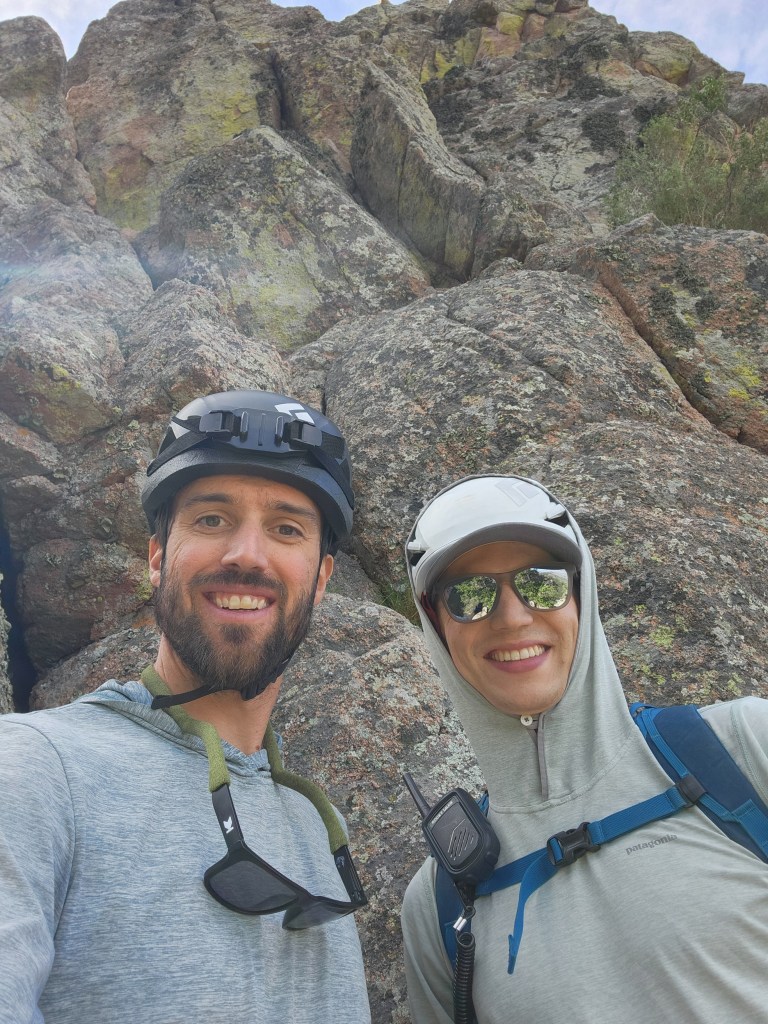
Ryan used about 55 meters of the 60 m rope, which linked pitches 1 and 2 from the route description, but he was complaining of rope drag. I started climbing up, and even though it was easy terrain, I felt like I was in the zone. Focused and alert, but not scared. The scenery and position definitely make up for the forgettable, yet fun and cruisey climbing.
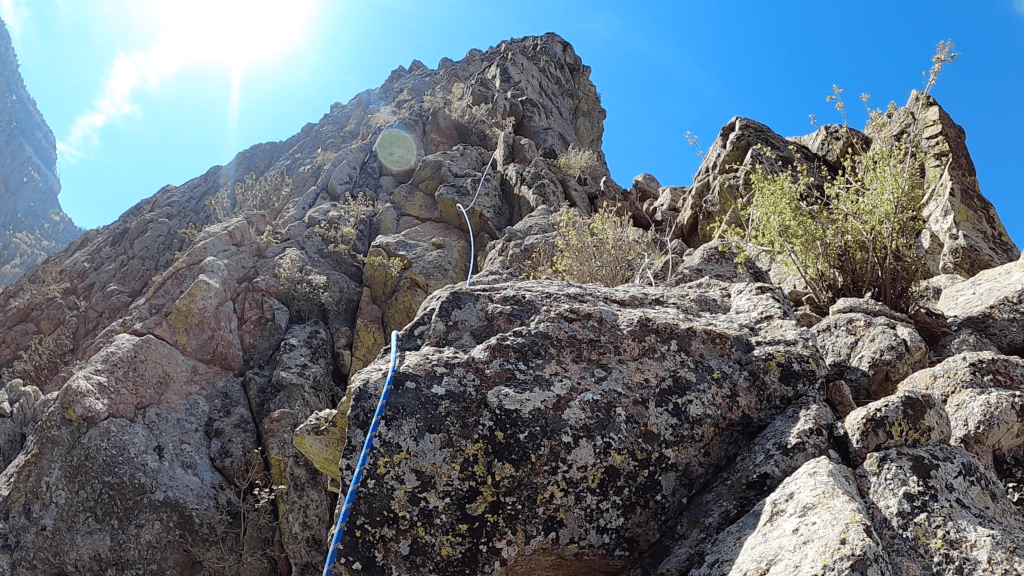
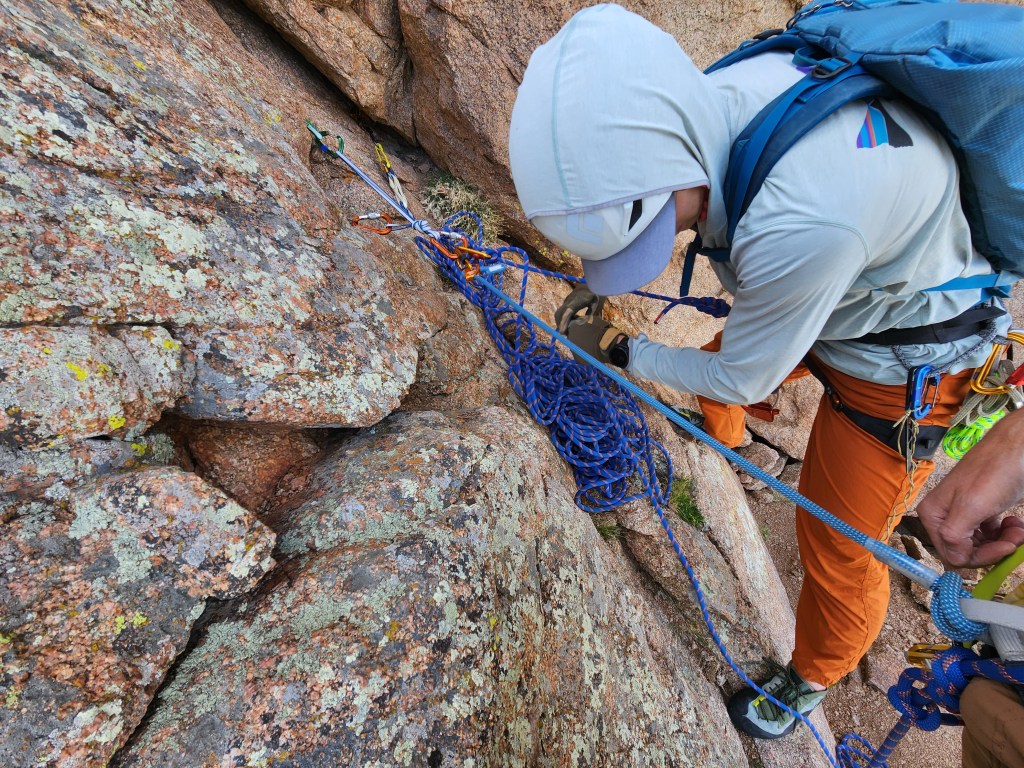
I took the lead for the next pitch. This was definitely one of the steeper sections. None of the moves were all that difficult, but I was definitely moving carefully as the exposure picked up. I placed a #2 cam in the initial crack system. As I pulled up on top of the next ledge, I watched that cam fall out and slide down to Ryan. I was now 20 feet above the belay with no protection… At least I was on a comfortable ledge where I was able to put a cam in far left with an extended alpine draw. I knew this would turn into heinous rope drag even with the extension, but I needed a piece of pro.
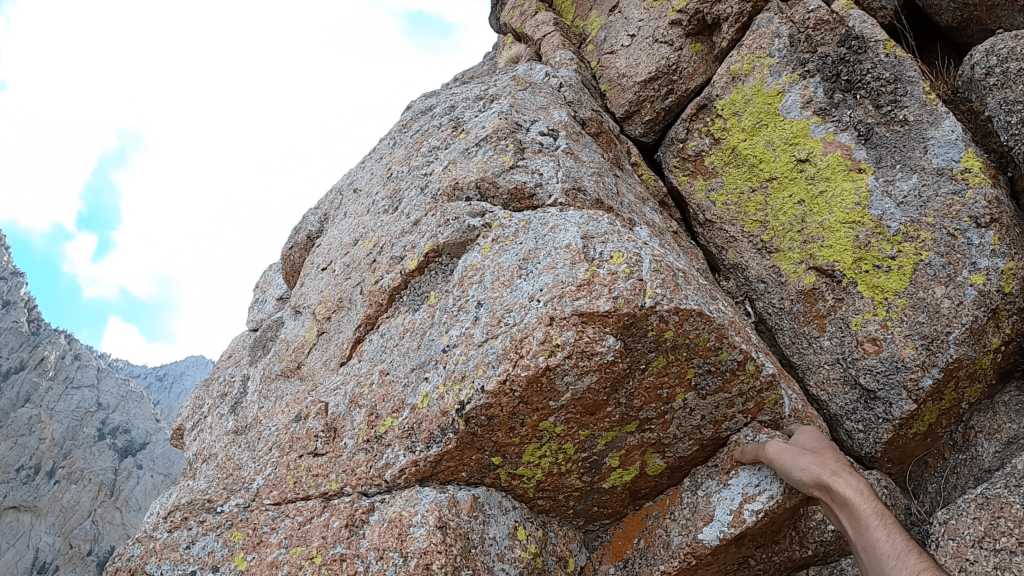
The rest of the pitch flew by. I was feeling confident, but the rope drag caught up to me. There was an inviting belay ledge where I radioed to Ryan. “Ok.. you have a lot of rope left,” he replied. I didn’t care, there was no way I was going to continue up with 30+ pounds of drag. I built an anchor, which I’m a little embarrassed to admit was my first 3-piece anchor to be used for a belay station in the wild. As I was belaying, I noticed the nut in the middle was wiggling around a bit. Definitely not a great placement, but I felt good about the other two legs.


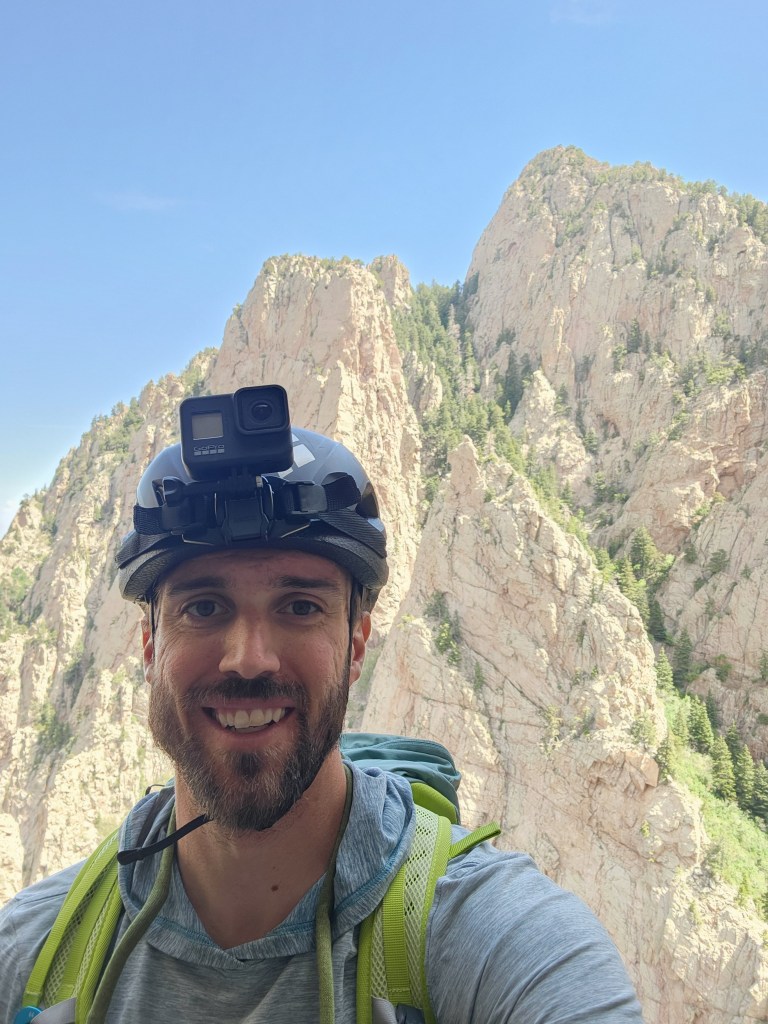
Ryan climbed up and continued past me for our third pitch. He used the full rope to reach a flat area on the ridge, belaying off a tree. I followed without any trouble. This pitch had a few vertical sections, but it felt like the slope was starting to ease up. However, looking ahead there was still quite a ways to the summit. The route description says “1,000 feet of 3rd and 4th class to the summit”. Ryan coiled the rope over his shoulder and we carried on with a running belay over easy terrain.
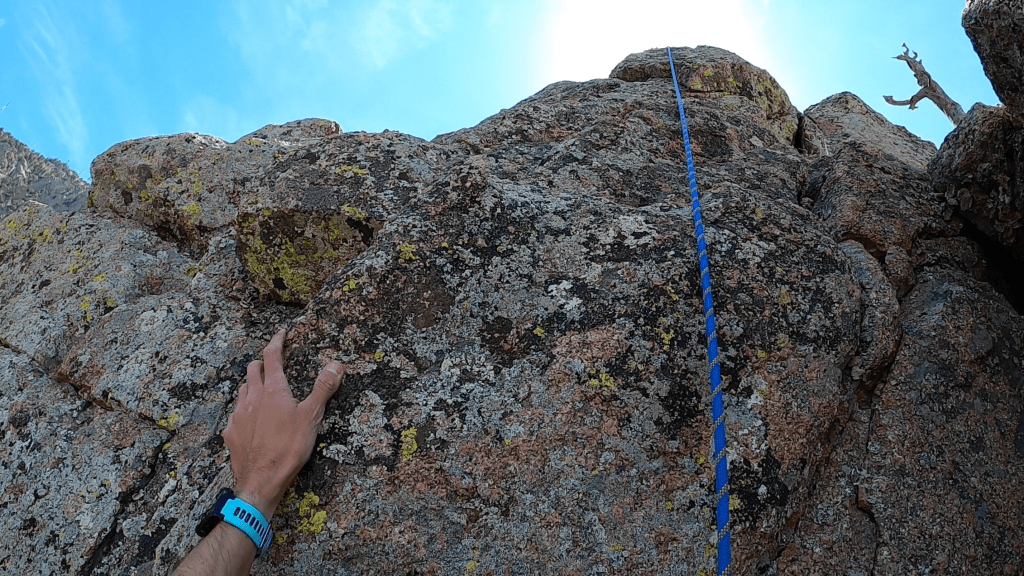
There was one section of 4th class terrain which brought us to the edge of the cliff. Ryan and I stopped for a moment to talk it through. Even though the moves looked doable, one slip would mean falling down into the canyon below. I went first. To say I was being careful would be an understatement. Every move was made only when I was absolutely certain my hands and feet were solid. This was definitely the mental crux.
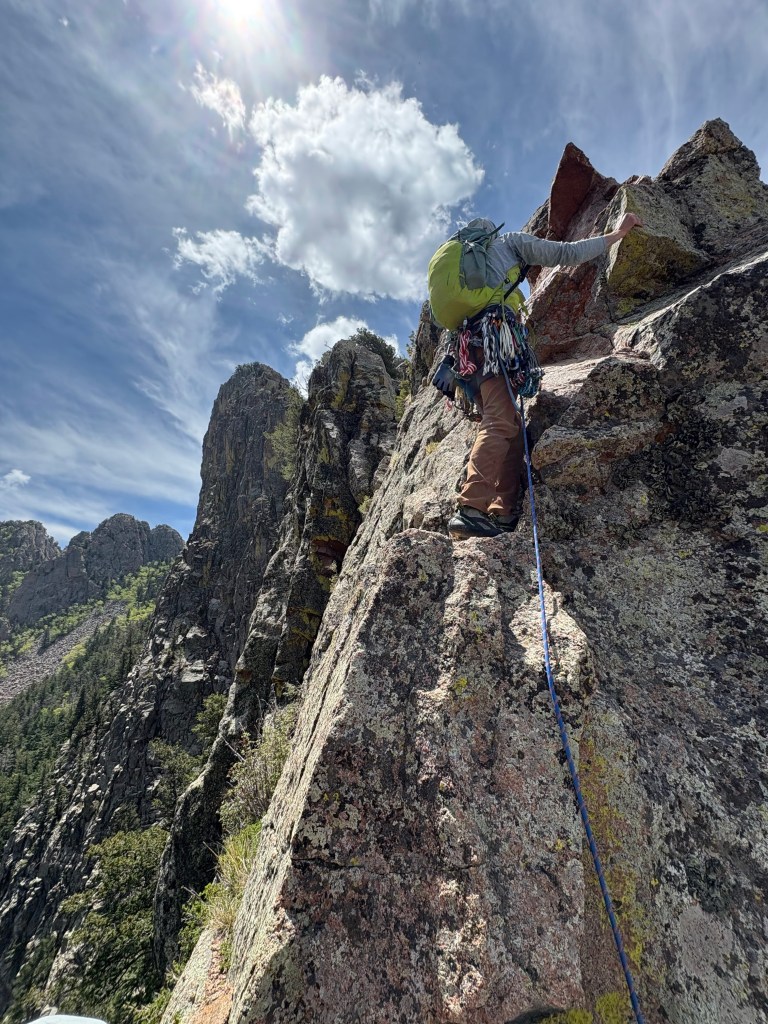
It was clear we didn’t have much vertical rock left. We took a break on a narrow section of the ridge where we untied, packed up the rope and rack. There were a few more exposed blocky steps to surmount, which felt sketchy with a heavy pack pulling me off the mountain. I was teetering between having the time of my life and fearing for my life. As I’ve improved as a climber in the last year, my confidence on easier terrain has grown exponentially, but it’s still hard to shake the impending doom of a deadly fall.

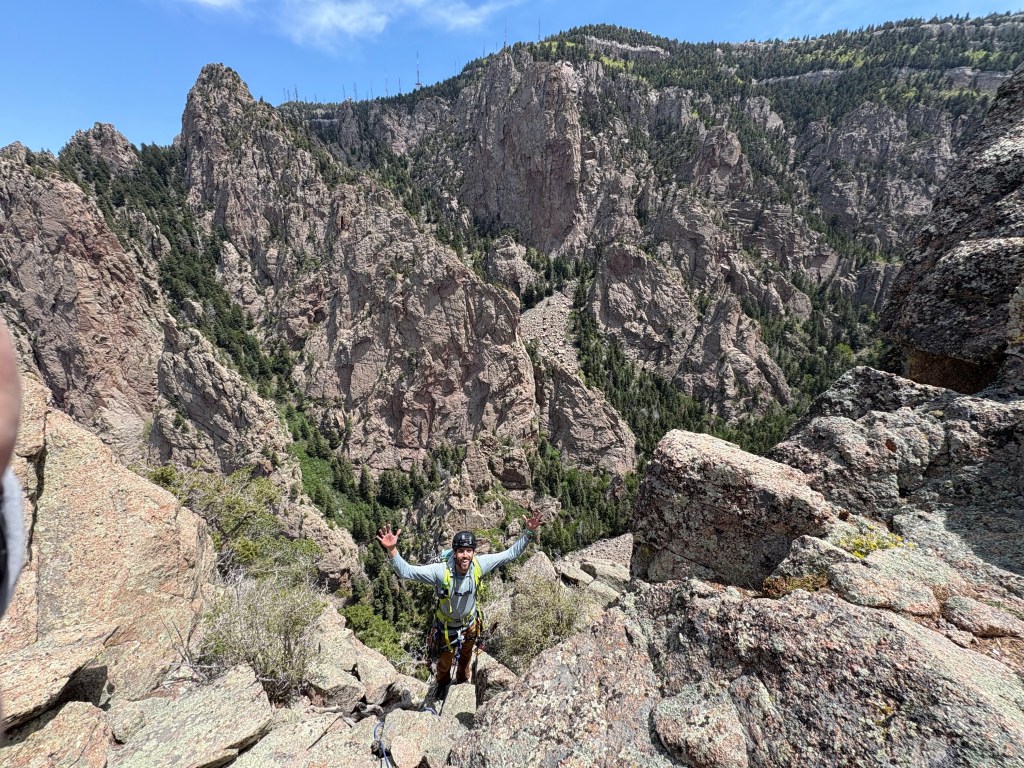
Ryan and I reached the west summit where we slowly got a view of the final boss. The true summit is guarded by a steep blocky headwall. A narrow gully in the rock gave us passage with ample solid holds. It was an exciting finish! We yelled a hearty, “CUMBRE!” which echoed off of the walls opposite La Luz canyon.
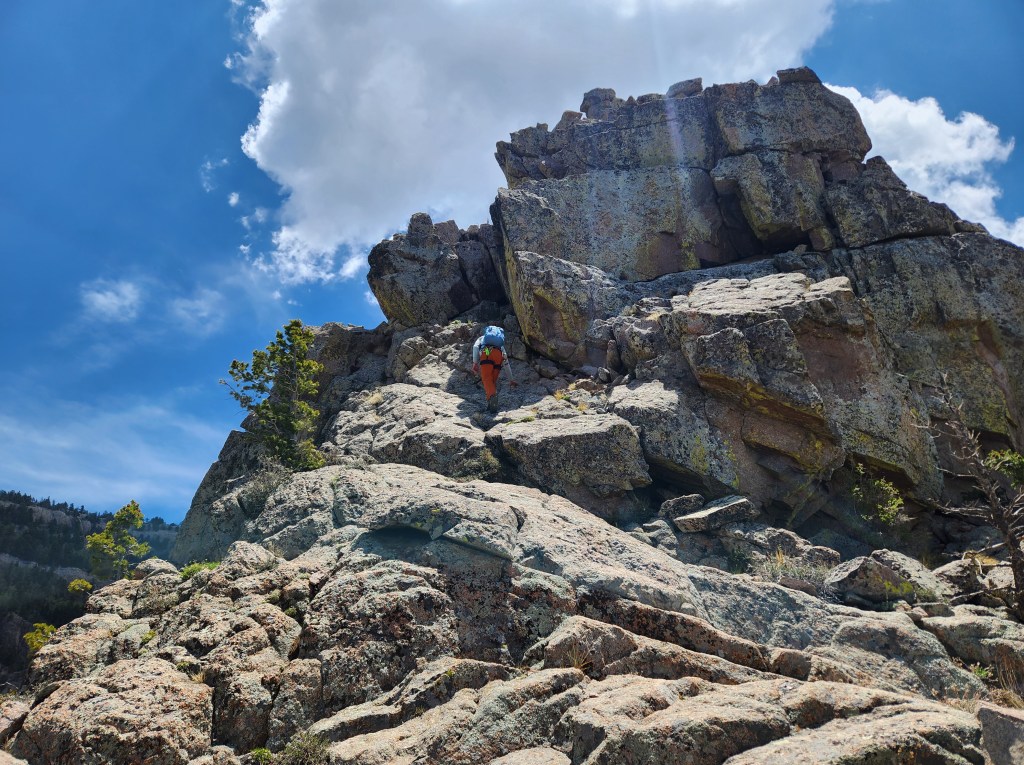
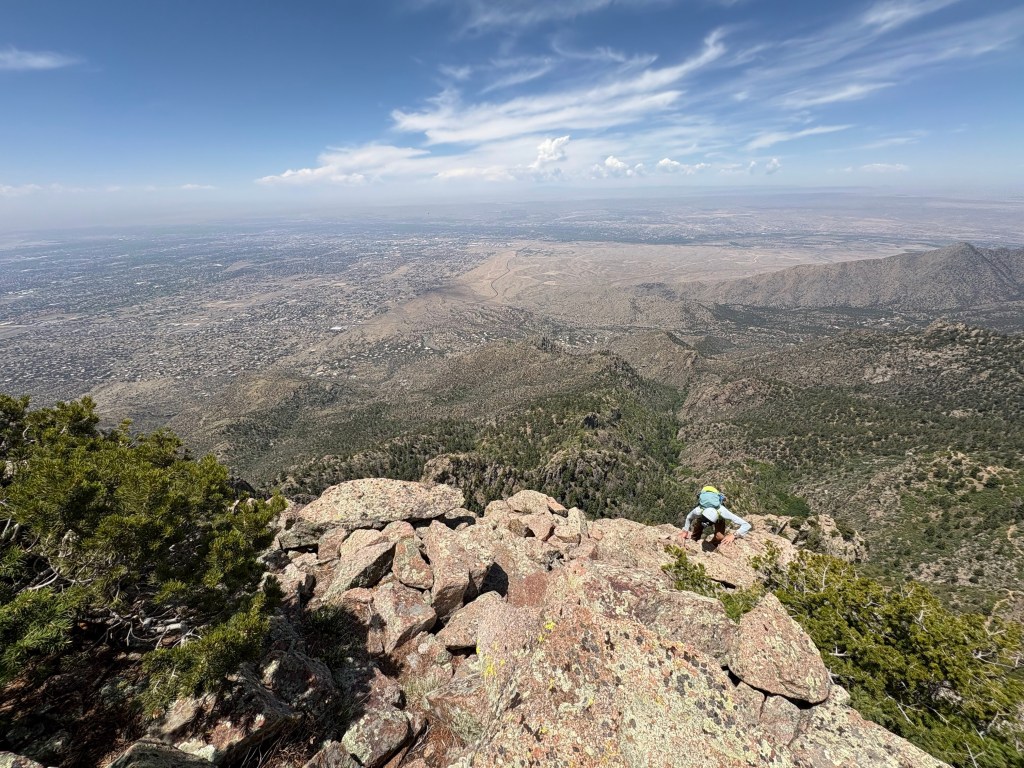
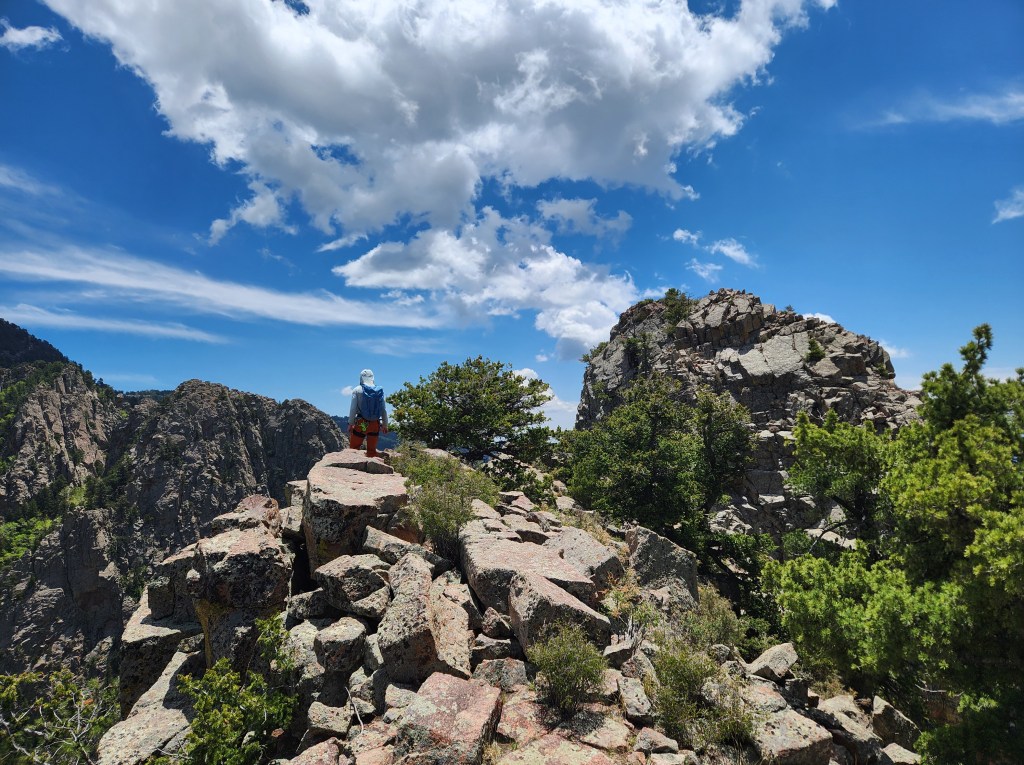
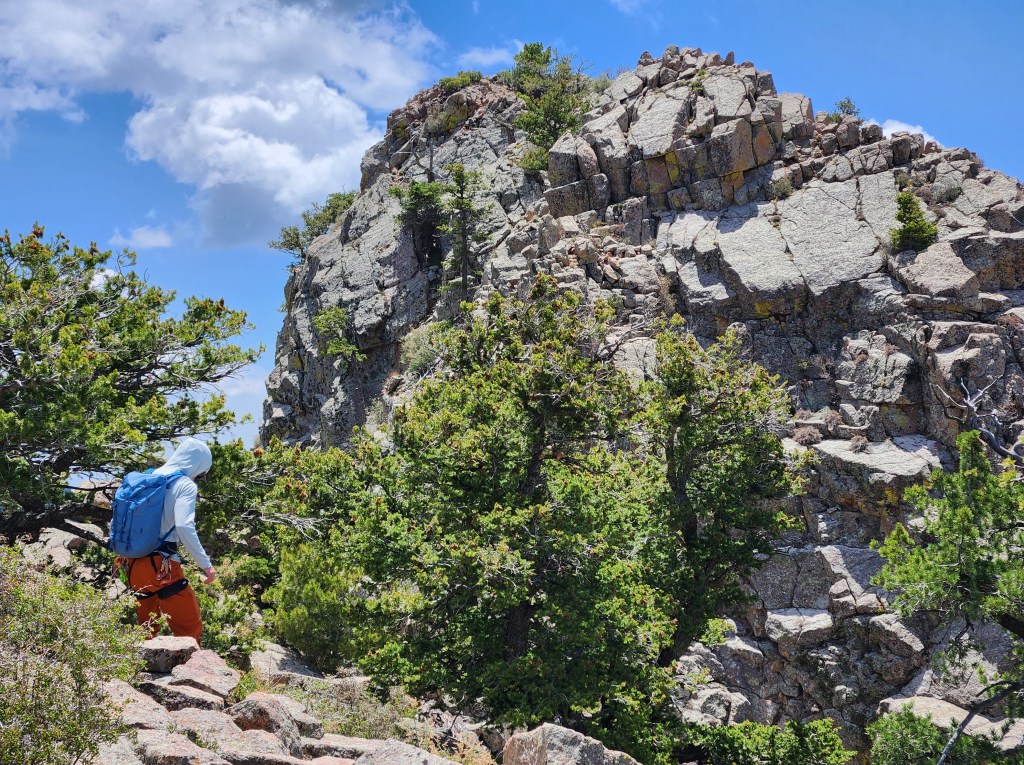
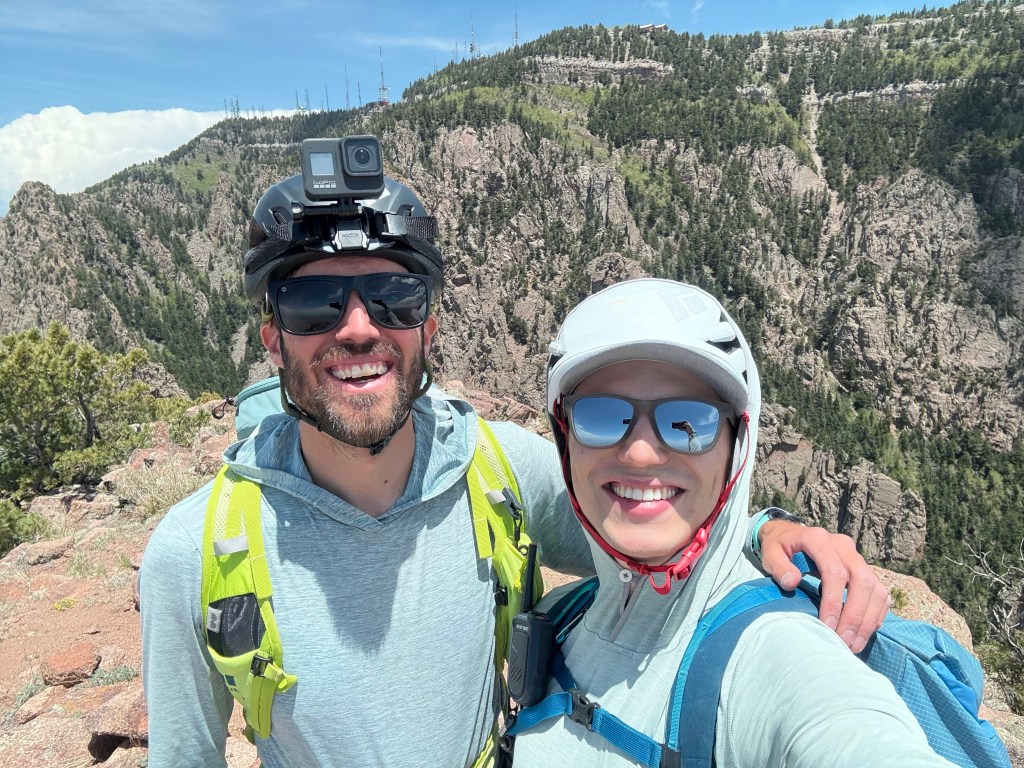
Shockingly, after all that climbing, the descent route is a walk-off. There are some easy slabs down the east side of the summit. There was one sketchy moment for me as I struggled to step down a small drop while keeping my balance, but I figured it out eventually. Once we were off the granite, we were home free. A short ways through the woods, down a brief boulder field, and we were back on the La Luz trail.
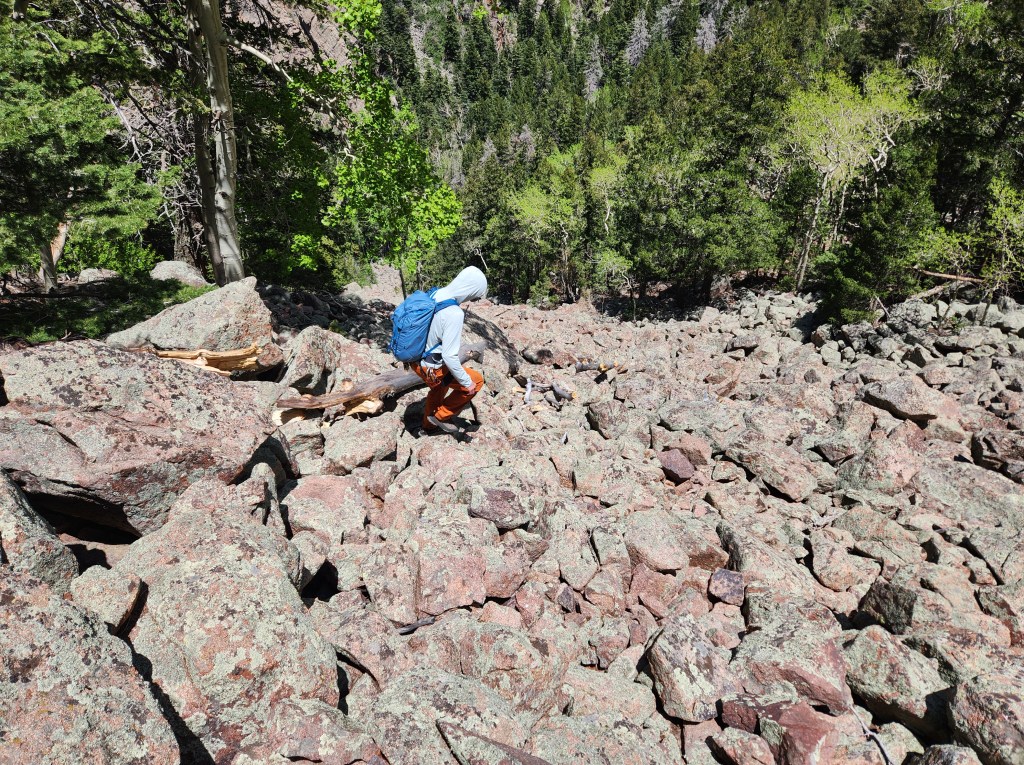
From there, our “descent” turned into an ascent back up to the car on Sandia Crest. It was surprisingly toasty at 10,000 feet. I think we lost a majority of our sweat on this 2 mile hike out. Nevertheless, we were riding a high of stoke and adrenaline as we passed muggles on the final bits of trail. We completed the mission in 6 hours, faster than expected!
Climbing The Thumb was epic! The exposure was a lot to handle at times. Experience is the well we draw from to quell fear. While I was definitely scared at times, I knew from my past experience that I was fully capable of climbing through the freaky sections. I was really pleased with how Ryan and I moved efficiently but not rushed. This climb felt like the perfect route to push my limits a little and hone some trad skills!
Check out the footie (~14 min):
Beta for climbers:
- The round trip distance is 4 miles
- Vertical gain is 2,000 feet, split evenly between hiking and climbing.
- Linking pitches helped us move up fairly fast at the cost of rope drag, which I think is inevitable even with lots of extension.
- Deciding when to untie is a personal decision. Some people free solo this route, some are roped up the whole way. We did about 50/50.
- It is possible to bail off some trees to the north side (towards La Luz canyon) about half way up.
 Distance Over Time